
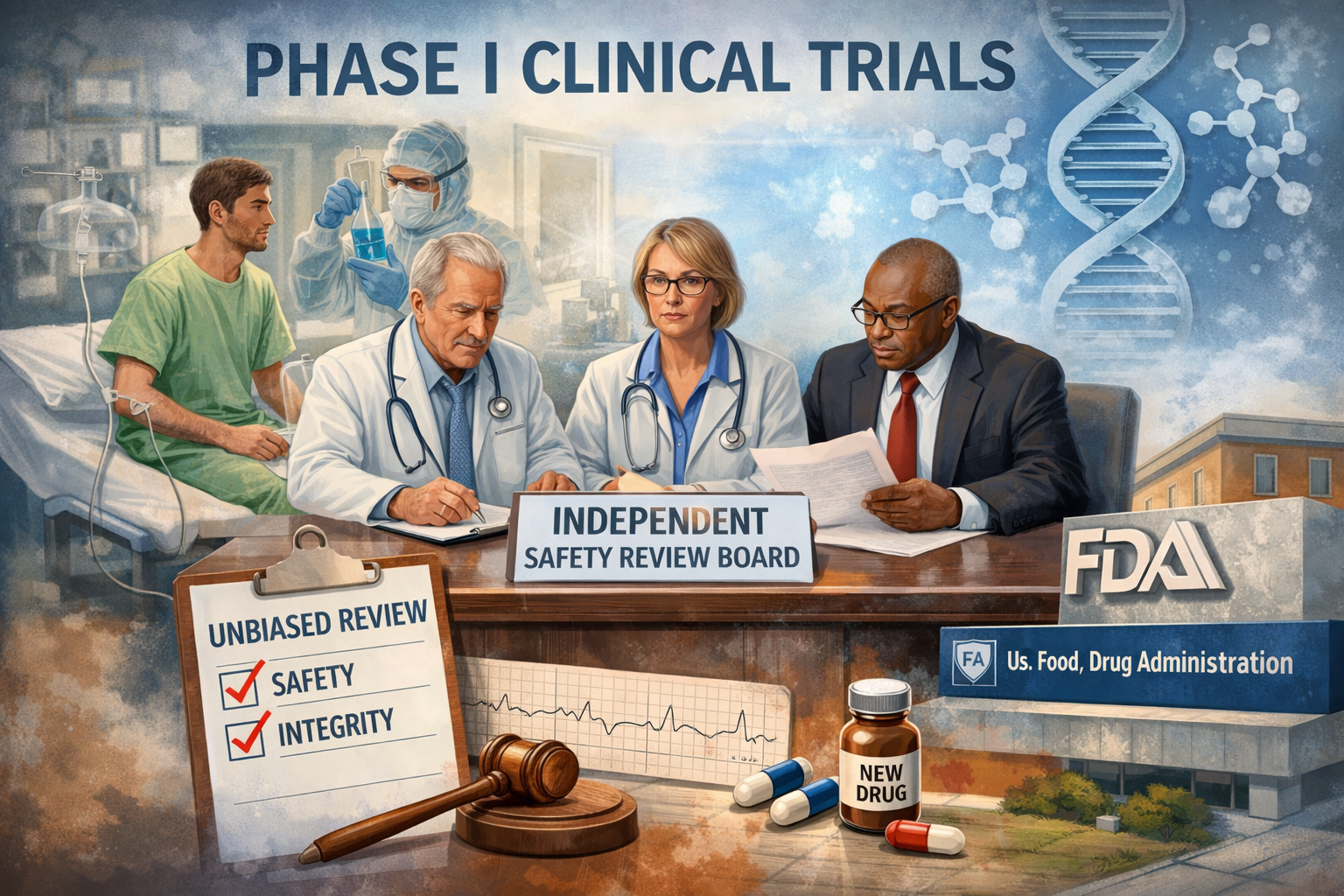
Phase I clinical trials represent the first administration of investigational products in humans and therefore carry inherent and often unpredictable safety risks. While early-phase studies typically rely on Safety Review Committees that may include sponsor-affiliated members, this structure can introduce real or perceived conflicts of interest. In this article, Klein and Morgan highlight the limitations of traditional safety oversight models and propose the use of an independent, unbiased Safety Review Board to strengthen participant protection, ensure objective safety assessment, and uphold ethical standards in early clinical development.
Dr. Gerald Klein: Speaker and Poster Presentation at SOCRA 2023 Annual Meeting
Improving Informed Consent Forms in Clinical Trials

Practical Pointers for Drug Development and Medical Affairs / May 2023
Written by Gerald L. Klein, MD & Roger Morgan, MD

Drug Development
Informed consents have grown much larger, more complex, and oftentimes uses terminology that may be difficult to understand for persons with limited language skills. [1] It is imperative to make these forms shorter, simpler, and easier to understand. Studies have demonstrated poor patient comprehension of the essential elements of the informed consent process not just in the United States but globally. [2] [3] [4]
The definition of a laboratory adverse event is usually described in the protocol as a value that is clinically significant in the investigator’s judgment. One frequent protocol guidance for this is having a lab test reported as clinically significant if repeated. However, many results are repeated just to ensure that the results are insignificant or are due to a procedural error (hemolyzed blood). We recommend removing “repeat laboratory testing” as an indicator of a significant adverse event.
Removing all patient identification is important for sites to remember when they send patient hospital records or other medical records to the sponsor or CRO. In addition to name, it also includes items such as home address, telephone number and medical record number.
Medical Affairs
Making the most out of poster presentations
Place on social media
Solicit comments and questions
Answer appropriate questions and communicate these to a wider audience
Broadcast current and future work in this area when applicable
Write up and disseminate pertinent questions and answers
Create a white paper and journal articles from the data
Commercial booths at scientific conferences
Verify that a promotional committee consisting of legal, medical, and regulatory (LMR) has reviewed your booth and all material in detail. This includes the following:
Booth location
All banners
All printed material, videos, handouts, etc.
Labels, headers, designs, etc. on the booth wall
Location of medical science liaisons (MSLs) in relation to the commercial team
Detailed examination of all items is critical to maintain compliance with the regulations.
Product feedback is an important way to learn how health care providers are actually using your product
Having MSLs talk directly to clinicians is a way to gather this information. In addition, you can learn why and when they are actually using the product in this manner.
What difficulties or drawbacks are there to the product?
Can the patient experience be improved, such as administering a drug at bedtime?
[1] Schumacher A, Sikov WM, Quesenberry MI, Safran H, Khurshid H, Mitchell KM, Olszewski AJ. Informed consent in oncology clinical trials: A Brown University Oncology Research Group prospective cross-sectional pilot study. PLoS One. 2017 Feb 24;12(2): e0172957. doi:10.1371/journal
[2] Ibid
[3] O'Sullivan L, Sukumar P, Crowley R, et al. Readability and understandability of clinical research patient information leaflets and consent forms in Ireland and the UK: a retrospective quantitative analysis. BMJ Open 2020;10: e037994. doi:10.1136/bmjopen-2020-037994
[4] Wen G, Liu X, Huang L, Shu J, Xu N, Chen R, et al. (2016) Readability and Content Assessment of Informed Consent Forms for Phase II-IV Clinical Trials in China. PLoS ONE 11(10): e0164251. https://doi.org/10.1371/journal.pone.0164251
Practical Pointers for Drug Development and Medical Affairs

Drug Development
It is often difficult to locate academic clinical research sites that are not already filled to capacity or who are so short-staffed that they cannot take on new projects. This provides an opportunity to work with and help educate and train the lesser-known medical institutions that have both the medical expertise and specific patients but lack substantive experience in clinical trials.
Currently, there is a greater emphasis on enrolling additional populations that have not adequately participated in clinical trials such as minority, geriatric, and pediatric populations. Investigators should ensure that these potential subjects fully understand the risks and benefits (the informed consent process) of participating in these studies. It. may be useful to have them answer a series of standardized questions to demonstrate that they understand the essential elements of the Informed Consent Form (ICF) (IRB approval should be obtained for the questions if in written form).
The following are links to FDA webpages and documents relating to the pre-IND and IND process that should be reviewed when developing your pre-IND submission briefing package:
Medical Affairs
New AI tools, ChatGPT for example, may be helpful in writing journal articles. This is especially true for providing an outline of the topics that you want to cover in the article. It may also be useful in finding references to help produce your original material, but they should be checked for accuracy.
When launching a new product or introducing a new indication of an established product, we recommend that you have multiple review articles discussing your product from not only an efficacy and safety standpoint, but also from a pharmacoeconomic standpoint and potential position in the Health Care Provider (HCP) therapeutic regimen.
When promoting your product, you may want to emphasize the importance of the individual patient reaction to a specific medication. Just because they reacted poorly or insufficiently to one drug in a specific class, does not mean they will react the same way to all drugs within that class.[1]
[1] Sundström J, Lind L, Nowrouzi S, et al. Heterogeneity in Blood Pressure Response to 4 Antihypertensive Drugs: A Randomized Clinical Trial. JAMA. 2023;329(14):1160–1169. doi:10.1001/jama.2023.3322
Practical Pointers for Drug Development and Medical Affairs
Written by Gerald L. Klein, MD & Roger Morgan, MD

Drug Development
Up to 50% of subjects have poor medication adherence in clinical trials. This can be a significant factor affecting the efficacy of the results. In order to prevent this, it may be worthwhile to do a placebo screening for 2-4 weeks to determine if the potential participant will demonstrate adequate medication adherence to be enrolled in the study.1
The constant change of regulations, introduction of new technology and the modifications of best clinical trial practices, makes the need for continuing staff education and training essential. This type of guidance will help maintain the highest clinical practice standard for your company and may also prevent staff turnover.
The signing of an Informed Consent Form is not totally adequate in obtaining a potential participants informed consent for a pharmaceutical clinical trial. The process should also involve a careful, meaningful explanation of potential risks and a commitment to attend all required patient visits and procedures. These procedures should be clearly defined so that the potential subject understands their actual commitment. This is not only a regulatory requirement but an ethical, moral, and medical obligation. If potential study participants better understand the risks and their obligations it should also aid with patient retention.3
Medical Affairs
A practical method to demonstrate the application of a biopharmaceutical product may be to publish a case history or series about this topic. Through these articles, health care providers are able to identify the example with their own patients and how this product may fit in with their practice.4
The use of n-1 clinical studies is another cost-effective manner of conducting small pilot clinical studies.5 They are especially useful in patient-centric research and to re-evaluate chronic therapies.6
Medical Affairs teams frequently want to work with established experts, Key Opinion Leaders (KOLs), in specific therapeutic areas.7 These teams should have an ethical synergistic plan that provides benefits for both the clinical scientist’s research and/or patient care (as well as addressing their own needs) allowing for a prudent exchange of ideas. Rather than compensating a physician only for their time, a more useful activity will help establish a better relationship. An example is a medical liaison (working for a company that sells allergy products), contacting a prominent allergist to determine what pollens seem to cause nocturnal allergy symptoms in July in San Diego.
Klein GL. The case for digital pill use in clinical trials. Clin Trial Pract Open J. 2021; 1(1): 89-94
Butryn, Tracy, et al. “Keys to success in clinical trials: A practical review.” International Journal of Academic Medicine 2.2 (2016): 203.
Yarborough, M. Rescuing Informed Consent: How the new “Key Information” and “Reasonable Person” Provisions in the Revised U.S. Common Rule open door to long Overdue Informed Consent Disclosure Improvements and why we need to walk Through that door. Sci Eng Ethics 26, 1423-1443 (2020).
Riley, David s., et al. “CARE guidelines for case reports: explanation and elaboration document.” Journal of clinical epidemiology 89 (2017) 218-235.
Duan N, Kravitz RL, Schmid CH. Single-patient (n-of-1) trials: a pragmatic clinical decision methodology for patient-centered comparative effectiveness research. J Clin Epidemiol. 2013 Aug;66(8Suppl):S21-8
Vohra, S., Shamseer, L., Sampson, M., Bukutu, C., Schmid, C.H., Tate, R., …& Moher, D. (2015). CONSORT extension for reporting N-of-1 trials (CENT) 2015 Statement. bmj, 350.
Scher, J.U., Schett, G. Key opion leaders - a critical perspective. Nat Rev Rheumato/17, 119-124 (2021).
Practical Pointers for Drug Development and Medical Affairs / January 31, 2023

Drug Development
It is absolutely an essential part of the clinical research process in providing Informed Consent, and having the potential participant sign the forms (ICF).1 It may help foster enrollment by also explaining to potential study participants not only why the research is being conducted, but also how their individual participation will help in product development and what this product has the potential to accomplish.
It is more difficult than ever to enroll patients in Phase I oncology clinical trials.2 One partial solution, when feasible, is to make this a multi-center semi-decentralized clinical trial rather than one inhouse unit.
Making some of these visits home visits may further enhance enrollment.
This will open up a wider enrollment area.
This may decrease subject travel time and costs.
The FDA will now start in-person meetings.
This gives companies the ability to have face-to-face dialogue with the agency.
Such meetings may provide a better chance for companies to present their data and reasoning.
Proper preparation with an experienced team is critical to success at these meetings.
Medical Affairs
Writing medical case studies is an excellent method to demonstrate your products’ attributes in an actual clinical example. It shows clinicians the practical aspects of the diagnostic or therapeutic intervention.3
According to Erica Dankiewicz, “The promotional review committee is a multi-disciplinary group with representatives from Medical, Legal and Regulatory and is often referred to as MLR.” Together, as a team, they ensure materials are fair balanced and meet function-specific standards while achieving marketing’s goals. In the US, the Federal Food, Drug, and Cosmetic Act (FD&CA) and Title 21 of the Code of Federal Regulations (CFR) predominantly govern prescription drug advertising and promotion”4 When conducting Legal, Medical, Regulatory Review, it is important to be conservative and follow the exact wording of the package insert.
Clinicians frequently come up with new potential uses for approved products. Allowing these physicians to conduct an investigator-initiated trial (IIT) may be a cost-effective way to test these concepts in a pilot study
——————————————-
https://www.fda.gov/regulatory-information/search-fda-guidance-documents/informed-consent
Why is it so difficult to enroll patients in clinical trials? Normal Kanarek, Dina Lansey, Harold C. Agbahiwe, Julie R. Brahmer, Elizabeth M. Jaffee, Antonio C. Wolff, Vered Stearns, Michael Anthony Carducci, and Richard C. Zellars J of Clin Onc 2014: 32: 15 suppl
Riley DS, Barber MS, Kienle GS, Aronson JK, von Schoen-Angerer T, Tugwell P, Kiene H, Helfand M, Altman DG, Sox H, Werthmann PG, Moher D, Rison RA, Shamseer L, Koch A, Sun GH, Hanaway P, Sudak NL, Kaszkin-Bettag M, Carpenter JE, Gagnier JJ, CARE guidelines for case reports: explanation and elaboration.
https://globalforum.diaglobal.org/issue/april-2021/time-to-review-your-promotional-review/by Erica Dankiewicz
Safety and Pharmacovigilance Tips

These Safety and Pharmacovigilance tips are aimed at improving the understanding of this area of clinical drug and device development. For example, clinical sites are frequently confused about the nuances of adverse event reporting, assessing causality, or the use of proper safety terminology. In addition, some sponsors may not be using the appropriate type of committee to oversee the safety of their clinical trial. See below for the first tip in this series and feel free to reach out to us with any questions: info@medsurgpi.com.
Clinical Investigators and their sites should establish a systematic way of assessing causality when adverse events and serious adverse events occur. The Bradford Hill criteria are an established practical way of determining these events[1]:
Strength of Association: a strong association between a treatment and an adverse event indicates causation. For example, each time the drug was given to a subject, it caused vomiting within a predictable time period.
Consistency: Established adverse event attributions or previous determinations in similar situations indicate causation.
Specificity. An established mechanism of action connecting the treatment and the adverse event indicates causation.
Temporality: exposure to the product must occur before the disease or event, and not after a latency period. However, temporality is not sufficient to establish causation.
Biological Gradient: a dose response effect is a strong argument for causation.
Plausibility: the causal relationship is biologically plausible.
Coherence: the known facts fit the natural history and biology of the disease.
Experiment: Epidemiologic studies indicate causation.
Analogy: a similar agent causes the same type of AE.
[1] Klein, G., Johnson, P. and Morgan R., Medical Monitoring of Clinical Research Studies. J. Clin. Res. Best Practices. 2021: Vol 17 (1)
Tips For Being A Good Medical Monitor

Gerald L. Klein, MD and Roger Morgan, MD
PROMPT RESPONSE TO INVESTIGATOR SITE QUESTIONS
Answering questions about inclusion and exclusion (I/E) is an important function of the medical monitor.
A prompt response is necessary if the patient is waiting to be screened.
A clear explanation of your response
Document with the specific I/E criteria
Provide clear documentation for the Trial Master file/investigator and, if appropriate, furnish a reference article from the medical literature
If patient safety is involved, providing a quick response is crucial.
Examples of when a quick response is necessary:
Suspected Unexpected Serious Adverse Reaction (SUSAR)
If a question about the necessity of unblinding occurs
Serious adverse event that triggers the study to be stopped
A safety issue that needs to be discussed immediately with the site and or sponsor
It is important to have a backup medical monitor in place to provide this service continuously.
Provides coverage for holidays, vacations, or sick days
PROVIDING MEDICAL REFERENCES
Why provide medical or regulatory references?
To foster greater understanding of the entry criteria
To help the sites form better decisions in the future
To create mutual respect between the sites and the medical monitor
To help with better regulatory understanding of the study
ANSWERING QUESTIONS
All questions from the sites should be added to a Question and Answer log (Q&A) and made available to other monitors who may be on the study as well as to clinical operations personnel.
This will ensure consistency and will help address future questions that are similar
Help the site decide about entrance criteria
May clarify some common questions that sites may have
Promotes minimization of protocol deviations
Potential Errors and Corrections in Early Phase Drug Development
Clinical Trials and Practice / Open Journal
by Gerald L. Klein, MD and Roger Morgan, MD

ABSTRACT: Many foreign and small companies trying to enter the United States biopharmaceutical market make avoidable errors in their early clinical phase drug development and clinical trials. They need to first understand the risks that they must endure with patent law, regulatory hurdles, the complexity and duration of the necessary clinical trials, and the large cost of drug development, which often necessitates raising substantial capital from investors. If appropriate capital for these clinical studies must be raised, then the company must be able to clearly articulate a realistic expected return on investment to these individuals. So, they must also understand the market, its exclusivity, and the competition. This must all be put together in a sleek pitch deck. Early errors frequently begin with too few, inadequate, or poorly constructed patents. These and other risks and errors may be prevented by the use of an experienced product development team. Many of these errors could be avoided if companies used more experienced drug development professionals to assist them in selecting the optimum patent strategy, regulatory plan, budget, contract research organization (CRO), clinical investigators, and etc. It is hoped that this opinion piece will help make early clinical trials more effective and save time and money.
MedSurgPI partners with Exquisite Biomedical Consulting to Offer Medical Consulting to Canadian Life Sciences and Medical Technology Companies

MedSurgPI, LLC partners with Exquisite Biomedical Consulting to provide Medical Affairs and Medical Communication services to the Canadian pharmaceutical, biotechnology, medical device and related technology companies and institutions.
Exquisite Biomedical Consulting, based in Vancouver, British Columbia offers a comprehensive suite of Medical Affairs and Medical Communication Services such as Medical Affairs Strategy, KOL and publication strategy, advisory panel strategy and execution, MSL training, due diligence for business development, medical writing of Clinical Evaluation Reports (EU MDR and MDD), white papers and manuscripts.
MedSurgPI offers part time Chief Medical Officer, Medical Monitoring, and Medical Consulting for Product Development and Medical Affairs for Drug, Biologic, and Device companies.
In addition, Shabnam Vaezzadeh, MD, MPA, BCMAS, CEO of Exquisite Biomedical Consulting will head up the medical writing and publications groups for MedSurgPI.
For more information contact Exquisite Biomedical Consulting: https://lnkd.in/dYV4zGbC / contact@exquisitebiomedical.com. MedSurgPI info: www.medsurgpi.com / svanvactor@medsurgpi.com.
The Case for Digital Pill Use in Clinical Trials
Clinical Trials and Practice - Open Tournal (CTPOJ)
by Gerald L. Klein, MD / Published August 17, 2021

Abstract: Medication adherence in clinical trials is significantly overestimated through every phase of drug development. This can cause a reduction in statistical power, potentially resulting in incorrect conclusions regarding efficacy, safety, tolerability, and dose-response relationships, in addition to major cost overruns. Digital pill systems enable adherence measurement through an embedded ingestible sensor paired with an external receiver. An oral pharmaceutical product is over-encapsulated by a pharmaceutical-grade shell containing a biocompatible sensor. Upon exposure to gastrointestinal fluid, the shell dissolves and the sensor is activated. Medication ingestion data is transmitted via a digital signal. Clinicians and researchers use this data to track, in real time, when and if a medication was taken. These systems have demonstrated a 99.4% rate of accuracy, and have over 15-years of supporting experience and safety data. Spurred by the accelerated adoption of technology in healthcare and in everyday life, patients have become tech-savvy. They quickly adapt to these devices, and are able to use them safely and effectively. Digital pills can be implemented in most types of studies. In early-stage trials such as pharmacokinetic and pharmacodynamic studies, or dose-finding studies, accurate information on maximum-tolerated dose levels is essential and cannot be established unless study participants are highly adherent. In later-stage pivotal trials, effective medication adherence tracking can strengthen the dataset and confidence in the study results. Significant nonadherence may generate results that do not meet statistical or clinical significance for the critical endpoints, resulting in at worst, a failed trial, or at best, the need to enroll additional patients at substantial additional cost. Most clinical trials fail to achieve statistical significance, and poor medication adherence is often an important contributor. A digital pill system can ensure the quality and integrity of adherence data, increase confidence in the overall study data, and improve clinical trial efficiency.
The Importance of Teaching and Fostering Clinical Research in Primary Health care
Gerald L. Klein, MD and Mark A. Brown, PhD
It is important for primary health care (PHC) teaching institutions and hospitals to create an atmosphere fostering clinical investigation for all health care practitioners (HCP). This involves not just clinical trials, but observations, examinations, and investigations are a critical part of the education of any health science students. This is the basis of science. Without knowing how to apply a scientific thought process and methodology to a clinical situation, it will prevent one from reaching their optimum abilities. Continue reading…

White Paper Published in DIA

The Extraordinary Problem of Medication Nonadherence in Oncology Patients and How Digital Pills Can Make a Difference. Available to download.
Recognizing High Risk Traumatic Wounds and Preventing Infections and Complications
Review Article / Emergency Medicine and Trauma Care Journal
by Gerry L. Klein and Peter C. Johnson, MedSurgPI, LLC

Abstract: Simple traumatic wounds are a frequent event that can usually be managed without sequelae, unless the wound is of high risk. High risk wounds have a greater propensity to become infected and complicated. Such wounds are characterized by a specific type of wound (i.e. jagged), location of the wound (i.e. lower leg); and patient’s underlying medical condition (i.e: diabetes).If these wounds become infected, they have a negative impact on morbidity, mortality, quality of life, and costs. The take-away should be a wake-up call to physicians specifically and healthcare professionals more broadly that a much more aggressive and effective treatment regimen to prevent wounds from becoming infected is required. Such a regimen should likely include a comprehensive understanding of wound types, the degrees of microbial contamination, and novel ways to prevent infections through wound debridement and irrigation.
Dr. Gerry Klein to serve as panelist on Webinar: Wound Infection in Humanitarian Emergencies

#PrepareToProtect #IRPWebinar #MedicalResponse #HumanitarianEmergencies #GFARC #WHO
We at MedSurgPI, LLC are delighted to participate in and invite you to a webinar on wound infection, organized by Infection Reduction Partners, an initiative to promote and champion cross-sector collaboration and partnerships towards the effective reduction of infection rates worldwide.
This webinar will explore the cross-sector data, guidelines, and best practices in wound infection during disaster response and humanitarian emergencies. A presentation of practical and innovative options to reduce the risk of infection will be shared and we will discuss current publications including IFRC’s “International First Aid, Resuscitation and Education Guidelines 2020,” WHO’s Guidance, “Prevention and Management of Wound Infection,” WHO/ICRC’s “Management of Limb Injuries,” and WHO’s “Global Guidelines for the Prevention of Surgical Site Infection”.
Panelists:
- Dr. Pascal Cassan, MD, Head of Global First Aid Reference Centre, International Federation of Red Cross and Red Crescent Societies
- Flavio Salio, Team Lead - Emergency Medical Teams at the World Health Organization
- Kim Delahanty, BSN, PHN, MBA/HCM, CIC, FAPIC, Infection Prevention Control Advisor/Referent, Médecins Sans Frontieres USA/OCP (Doctors without borders)
- Dr. Gerald L. Klein, MD, Principal at MedSurgPI, LLC, wound infection consultant
Moderator:
Tessy Antony de Nassau, Ambassador for UNAIDS, and Patron to UNA-UK
Find out more on IRP social media Facebook, YouTube, Twitter, Instagram, LinkedIn!
Audience:
Medical team members involved in humanitarian aid, disaster relief, and emergency response: Medical directors, doctors, nurses, technicians, responders, infection preventionists, health officers, medical team leaders
NGOs
International Organizations
Government/Ministries of Health
Potential Psychological Benefits of a Regenerative Graft for Nipple Reconstruction

Link to this article appearing in the Journal of Aesthetic & Reconstructive Surgery ISSN 2472-1905
by Gerald L. Klein and Peter C. Johnson
Vol. 7 No.2:17
The Medical Monitor is one of the key players in keeping subjects safe in clinical trials. This article helps explore the role of the Medical Monitor
Journal of Clinical Research Best Practices
Medical Monitoring of Clinical Research Studies
By Gerald L. Klein, Peter C. Johnson, and Roger Morgan

Introduction
The Medical monitor’s (MM’s) primary responsibilities in a clinical trial are to oversee the safety and protection of the research subjects and to provide independent oversight to help ensure the scientific reliability, clinical integrity, and quality of the clinical trial. Although the Food and Drug Administration (FDA) has not spelled out the necessity and role of the medical monitor, MM participation is important for compliance with Good Clinical Practice (GCP) guidelines and MMs almost always play a significant role in multicenter clinical trials.1 The best practices for MMs described in this article can also help study sponsors comply with International Council for Harmonization (ICH) guidelines, Technical Requirements for Pharmaceuticals for Human Use, the United States Code of Federal Regulations (CFR), and FDA regulations and guidances.2
The MM collaborates with the project manager, safety, data management, biostatistics and quality departments, principal and sub-investigators, the site coordinator, the Data & Safety Monitoring Board (DSMB), and any other group that directly or indirectly protects the safety of study participants.
Communications
Prompt and transparent communication is an essential element underlying safety in all human clinical studies.3 The MM should be the point person for medical, scientific and safety questions posed by clinical investigators, their site personnel, and staff at the study sponsor and contract research organization (CRO) involved in the trial. The MM’s contact information should be readily available to investigators and their staff. The MM should be available essentially 24/7 with a back-up MM when the primary MM is not available.
MMs often address significant questions on the following topics:
Documentation
Protocol and investigator brochure
Inclusion criteria
Exclusion criteria
Safety
Patient concerns
Adverse events (AEs)
Serious adverse events (SAEs)
Suspected Unexpected Serious Adverse Reactions (SUSAR)
Pregnancy
Medication errors
Concomitant medications
Laboratory values
Protocol deviations and waivers
Informed consent
Unblinding
Early termination or withdraw of a subject
Protocol-stopping rules
Other topics related to clinical research
DSMB and pharmacovigilance team questions with respect to adverse events
MMs document all relevant communications in the appropriate database. When there are multiple significant errors at an investigational site, the MM may be called into an investigation to determine the cause and whether corrective actions or new training is required.4 In rare cases, the MM, together with the project manager and quality assurance, assesses whether a site must be removed from a study due to safety issues, poor data quality, or violation of GCPs.
Maintain a Question and Answer (Q & A) log. Create anticipated Q & A’s prior to the study and then maintain a log to help provide quick, accurate and consistent answers to repeat questions. The clinical sites should be able to search the log for themselves.
Protocol and Investigator’s Brochure (IB)
The MM may write all or just parts of the protocol and investigator’s brochure. At minimum, the MM should review and approve these documents.5 Since the MM is expert on the protocol and the specific therapeutic indication being studied, the best practice is to involve the MM in training sponsor and/or CRO staff as well as the investigators and their personnel on the protocol and IB.
The MM should ensure that protocol endpoints make medical and scientific sense and are safely achievable. The clinical trial’s expected benefits must outweigh its risks.6 Inclusion and exclusion (I/E) criteria must align with this goal. I/E criteria must prevent the enrollment of subjects who are unlikely to obtain a positive therapeutic clinical endpoint or would be put at unacceptable risk in the study. For instance, a patient with a childhood history of bronchial asthma may not be appropriate to enroll in a clinical trial testing a medication that has properties of beta blockers, which can exacerbate symptoms of asthma.
The MM reviews permitted and prohibited concomitant medications (including over-the- counter drugs, herbs and dietary supplements) for possible interactions with the molecule being studied. The MM also ensures that the protocol does not specify types or numbers of procedures that would pose unnecessary risks for study subjects. The MM may recommend ways mitigate such risks.
The MM ensures that the IB clearly describes non-clinical studies and any adverse events of special interest (AESIs). An example of an AESI would be an abnormal electrocardiogram when all cardiac adverse events are of special interest to the regulatory authorities. All current knowledge about the drug, device or biologic must be clearly spelled out in the IB, not hidden in esoteric study reports.7 It is unfortunate that many investigators do not read the IB in detail. Therefore, the MM should try to convey the important aspects of the pharmacokinetics, pharmacodynamics, metabolism, drug interactions and expected adverse events associated with the study therapy to the investigator and the appropriate staff at the clinical site.
Review and Discussion
The MM reviews each subject’s eligibility data, screening physical examination results, medical history, concomitant medications, and laboratory tests before approving their entry into the study. If the investigator is attempting to enroll unqualified subjects, training may be required. The MM thoroughly discusses non-trivial protocol deviations (PDs), which should be rare, with the investigator, and only the most minor ones should be approved. A major PD may affect subject safety, data integrity, or the integrity of the entire study.8 A dosing error by which a subject received twice the dose of the investigational drug during one dosing interval would be a major deviation. A subject’s labs being a few hours out of the visit window would be a trivial deviation.
If time permits, the investigator should consult with the MM before unblinding a subject so the MM can assess and document the decision. The investigator should also discuss with the MM any early unusual termination or withdrawal of a subject from the study.
Data & Safety Monitoring Board (DSMB) or Data Safety Committee (DSC)
If there is a DSMB or DSC, the MM should participate in the blinded section of any meetings to help answer any questions related to adverse events and other potential safety and enrollment issues.9
Adverse Events
One of the most significant MM responsibilities is to work with the investigator to determine the most accurate causality of Serious Adverse Events (SAEs) and Suspected Unexpected Serious Adverse Reactions (SUSARs). SUSAR expectedness determinations should be based on the Reference Safety Information section of the IB, or, in studies of marketed drugs, the applicable package insert. Many investigators do not have a good understanding of causality assessment, and poorly defined regulatory terms and examples do not help the situation.10 Following the CIOMS report recommending a binary approach of “related” or “not related” in determining causality simplifies the complex and confusing terminology.11 There is no accepted standard for assigning causality to an SAE, but employing the following Bradford Hill Criteria is an excellent way to determine causality:12,13
1. Strength of Association. A strong association between a treatment and an adverse event indicates causation. For example, each time the drug was given to a subject, it caused vomiting within a predictable time period.
2. Consistency. Established adverse event attributions or previous determinations in similar situations indicate causation.
3. Specificity. An established mechanism of action connecting the treatment and the adverse event indicates causation.
4. Temporality. Exposure to the product must occur before the disease or event, and not after a latency period. However, temporality is not sufficient to establish causation.
5. Biological Gradient. A dose response effect is a strong argument for causation.
6. Plausibility. The causal relationship is biologically plausible.
7. Coherence. The known facts fit the natural history and biology of the disease.
8. Experiment. Epidemiologic studies indicate causation.
9. Analogy. A similar agent causes the same type of AE.
Safety and Pharmacovigilance Reporting
The MM develops or reviews a brief narrative describing each SAE and SUSAR, which should include the following elements:14
Clinical event (postmortem findings if applicable)
Course of event, with temporal relationship to experimental product
Outcome of the event with the nature, severity and intensity
Relationship of the subject’s medical history and concomitant medications to the event
Significant test results or laboratory findings
Therapeutic treatment for the event
Action, if any, taken with regard to experimental product
Causality assessment by investigator and sponsor
Review and analysis of similar events with the experimental product
The MM works with the safety/pharmacovigilance team to code adverse events based on the latest edition of the Medical Dictionary for Pharmaceuticals for Human Use (MedDRA).15 The MM also reviews the coding of concomitant medications using the World Health Organization’s (WHO’s) latest edition of pharmaceutical names (when it is used in the clinical trial). The MM reviews all SAE and SUSAR reports for accuracy and completeness and is the point person to discuss such events with the sites.
Conclusion
Since there are no regulatory guidelines on MM duties, this article has discussed those that are most significant. With the possible exception of the lead principal investigator, the MM should be the person most expert on the medical and scientific aspects of a multicenter study. The principal investigator at each site and the MM, along with DSMB and the institutional review board (IRB), share primary responsibility for the health and safety of study subjects and ensure the validity of the study. They must establish working relationships to ensure that subjects are protected and study data, including SAE and SUSAR reports, are accurate. This profound responsibility means that the MM for a study must have the requisite expertise, personality, dedication and ability to use the processes outlined in this article.
References
Vijayananthan A. et al., “The importance of Good Clinical Practice guidelines and its role in clinical trials.” Biomed Imaging and Intervention Journal, 2008; 1: e5.
E6(R2) Good Clinical Practice: Integrated Addendum to ICH E6 (R1) Guidance for Industry, FDA, March 2018.
“FDA Guidance for clinical investigators, sponsors, and IRBS: adverse event reports to IRBs-Improving human subject protection,” FDA, Jan 2009.
Knepper D. et al., ‘Detecting data quality issues in clinical trials: current practices and recommendations,’ Therapeutic Innovation 7 Regulatory Science, 2016; 50:15- 21.
World Health Organization, Guide for writing a Research Protocol for research involving human participation; 2014.
Emanuel E. et al., “What makes clinical research ethical?” JAMA, 2000; 283:2701- 2711.
Fiebig D. et al., “The investigator’s brochure: A multidisciplinary document,” Medical Writing, 2014; 23:96-100
Attachment C: Recommendation on Protocol Deviations, Office of Human Research Protection, HHS.gov.
Calis A. et al., “Understanding the functions and operations of data monitoring committees: survey and focus group findings,” Clinical Trials, 2017:59-66.
Morse M. et al., “Monitoring and ensuring safety during clinical trials,” JAMA. 2001; 285:1201-1205
“Management of Safety Information for clinical trials: Report of CIOMS VI,” 2005.
Federak, K. et al., “Applying the Bradford Hill criteria in 21st century data integration has changed causal inference in molecular epidemiology.,” Emerging Themes in Epidemiology, 2015; 12:14-23
Howick, J., “The evolution of evidence hierarchy: What can Bradford Hill’s guidelines of causation contribute?” Journal for the Royal Society of Medicine, 2009; 102; 2009:186-194
Modified from Ledade, S. et al., “Narrative writing: Effective ways and best practices. Perspectives in Clinical Research,” Perspectives in Clinical Research, 2017; 8:58-62
Brown. E. G., “Using MedDRA: implications for risk management,” Drug Safety. 2004;27(8):591-602
Authors
Gerald L. Klein, MD, is a principal at MedSurgPI. Contact him at 1.919.930.9180 or gklein@medsurgpi.com.
Peter C. Johnson, MD, is president and CEO of Cell X Technologies.
Roger Morgan, MD, is vice president of medical affairs at MedSurgPI, LLC.
Targeting NSP16 Methyltransferase for the Broad-Spectrum Clinical Management of Coronaviruses: Managing the Next Pandemic

Authors: Ilham M. Alshiraihi, PhD; Gerald L. Klein, MD; Mark A. Brown
Abstract
With the approval and distribution of demonstrably safe COVID-19 vaccines bearing exceptionally high efficacy profiles, it may be tempting to envision a return to “normal” in the coming months. However, if there is one lesson to be learned from the ongoing pandemic, it is that, in a world of evolving zoonotic viruses, we must be better prepared for the next deadly outbreak. While the acute nature of the COVID-19 pandemic demanded a highly specific approach, it is advisable to consider the breadth of seemingly endless possibilities in our approach to managing the next inevitable occurrence of an outbreak. Though there is little chance of discovering a “magic pill” to combat all future pathogens, the highly conserved nature of non-surface viral proteins exposes an “Achilles’ heel” in the structural genome of viral pathogens. Herein, we consider the potential of targeting such proteins to develop broad-spectrum therapeutics for the future. To illustrate this point, we outline the therapeutic potential of targeting the nonstructural protein 16 methyltransferase, which is conserved across most coronaviruses.
Improving Clinical Trial Safety
There is a dire need to establish transparent medication safety guidelines and to assure the public of the industry’s commitment to this task. Clinical investigators and their staffs who conduct clinical trials often do not understand some of the regulatory methodology used to assess medication safety, particularly with regard to the assignment of causality to drug-related Serious Adverse Events. Yet, this is critical to establish the safety of medication. The medical monitor in a clinical trial can help educate and guide investigators in a clinical study with regard to accepted causation assignment. Since there is a paucity in the literature regarding medical monitoring of clinical trials, this article will help to fill this gap, and to provide a guide to establishing proper causality of an adverse event. This open access article can be found at Medical Monitoring of Clinical Research Studies.
Orthotopic grafting of decellularized human nipple: Setting the stage and putative mechanism of healing

A complex skin structure (such as a nipple) can be successfully decellularized under conditions that prevent extracellular matrix crosslinking or undue matrix degradation [1]. This treatment removes cellular antigens, thus mitigating immunorejection concerns and enabling allogeneic transplantation for nipple reconstruction after mastectomy. Non-human primate studies have shown that host-mediated re-vascularization and re-epithelization of the decellularized nipples occurs within six weeks and nipple projection is maintained over the same timeframe [1]. The mechanisms by which a decellularized graft located on the surface of the body heals are incompletely understood, but are likely to follow a similar path to decellularized allografts that are implanted within the body, with some modifications. The following is a description of probable temporal events leading to healing under this circumstance.