
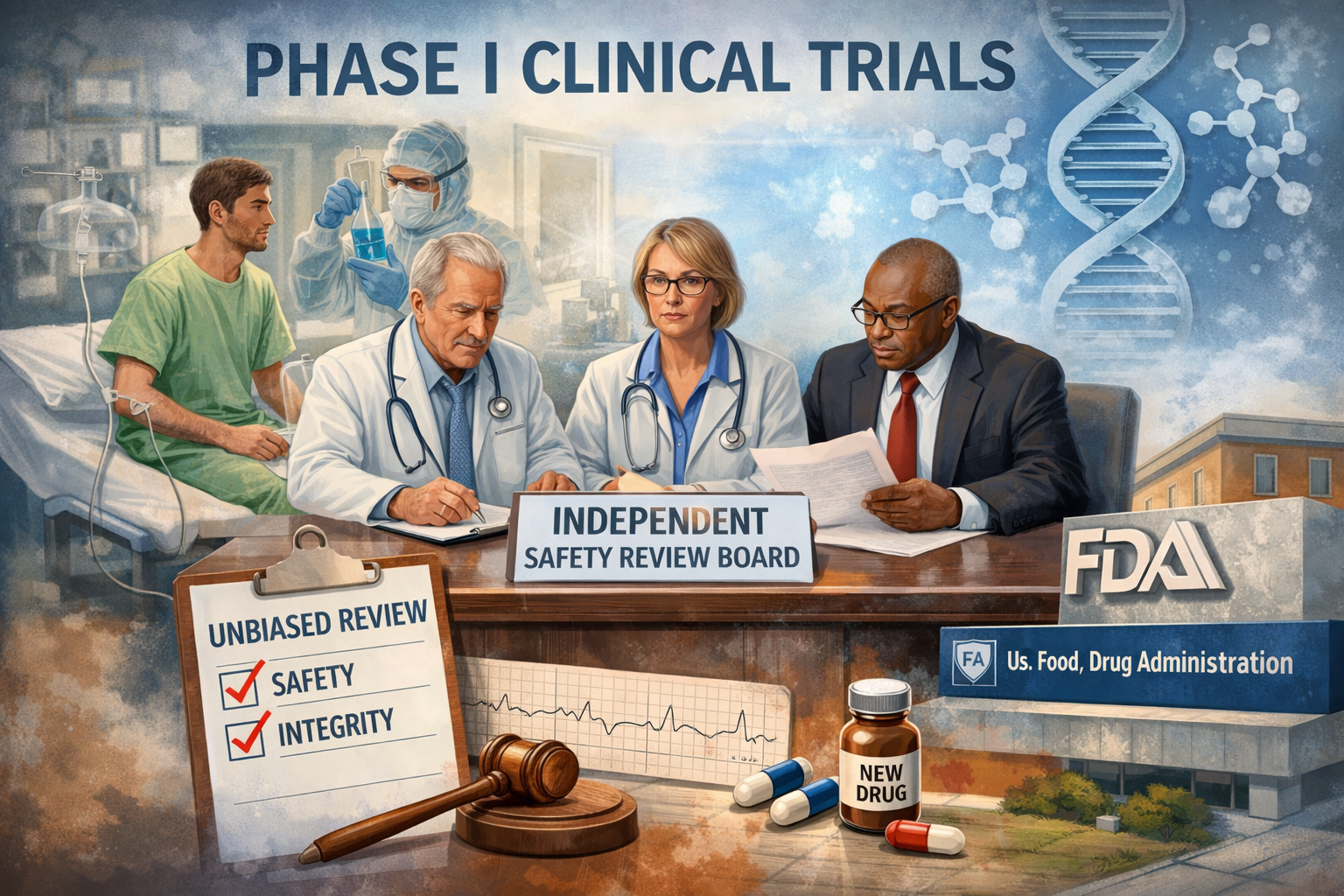
Phase I clinical trials represent the first administration of investigational products in humans and therefore carry inherent and often unpredictable safety risks. While early-phase studies typically rely on Safety Review Committees that may include sponsor-affiliated members, this structure can introduce real or perceived conflicts of interest. In this article, Klein and Morgan highlight the limitations of traditional safety oversight models and propose the use of an independent, unbiased Safety Review Board to strengthen participant protection, ensure objective safety assessment, and uphold ethical standards in early clinical development.
Lark Farm Road
Franklinton, NC, 27525
919-604-9708
Your Pharmaceutical Physician Consulting Company
Your Custom Text Here