Why closing more CAPAs is not the same as building a system that fails less often
Authors: Aida P. Carfagno[1], Gerald L. Klein, MD[2]; Shengjun Zhang, MD[3]; Freddy Byrth, BA[2]; David Weinstein, MD, PhD[4]
Affiliations: Cedar and Stone Consulting[1]; MedSurgPI, LLC[2]; BIOTrialMed[3]; David Weinstein Consulting Inc[4]
Every Corrective and Preventive Action (CAPA) tells two stories: the problem that occurred and the thinking that allowed it to happen. In many regulated organizations, CAPA has become the place where quality problems go after they happen. Deviations are opened, investigations are written, training is assigned, SOPs are revised, and closure dates are tracked. Months later, there will be an “effectiveness check” to confirm that corrective actions were completed on time. The system looks busy yet produces the same failures repeatedly. The problem isn’t the CAPA process. The problem is relying on CAPA to compensate for weaknesses that should have been prevented through thoughtful process design, effective risk management, and strong operational oversight.
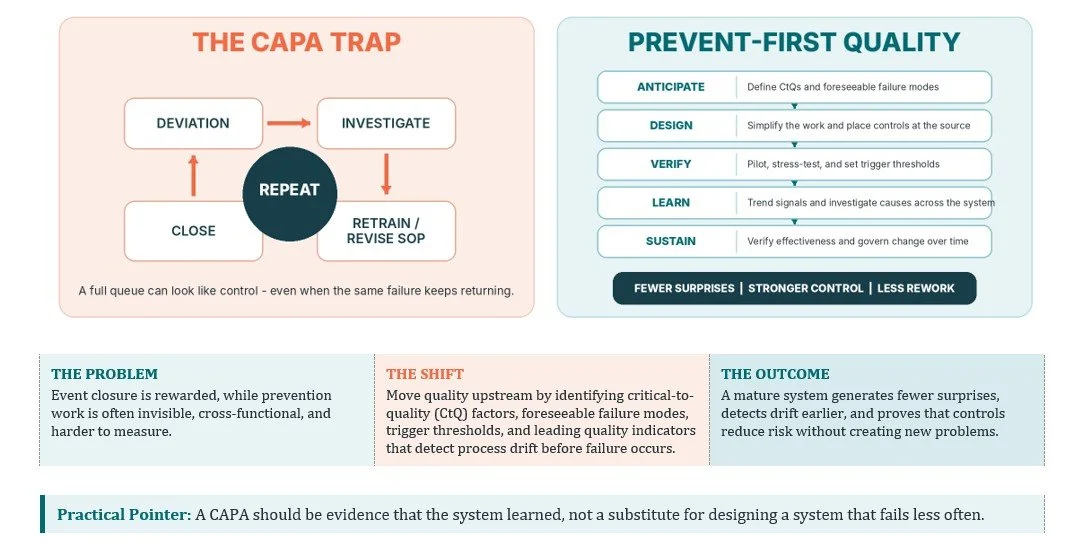
The Prevention Test: Every proposed corrective or preventive action should answer one fundamental question: Will this action make the process more resilient, or will it simply document that we did something? The Prevention Test provides a practical way to distinguish between the two. If the answer is no, the action may close a CAPA without meaningfully reducing risk or preventing recurrence.

Why Organizations Get Stuck in the CAPA Trap
The recurring problem is usually the operating system, not the quality form.
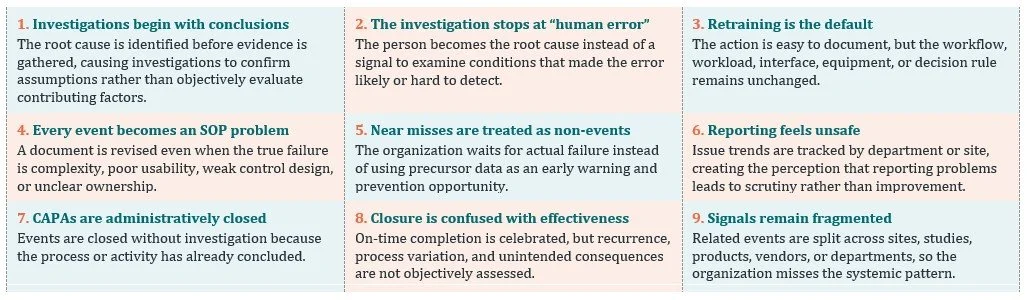
Nine Warning Signs: Every CAPA process tells a story about how an organization thinks. The health of that process isn't measured by how many investigations are completed or how quickly actions are closed. It's measured by whether the organization is learning, improving, and preventing recurrence. When investigations consistently stop at the obvious, retraining becomes the default answer and recurring issues are accepted as inevitable. The process has stopped driving improvement and started preserving the status quo. If you recognize several of the warning signs below, your CAPA process may be treating symptoms rather than solving problems.
Why the Trap Persists
Closure Pressure: Due dates reward administratively easy actions.
Siloed Signals: Data are not trended across programs, functions, or partners.
QA-Only Ownership: Process owners lack authority or resources to redesign work.
Lagging Metrics: Dashboards count failures and aging, not early warning or control.
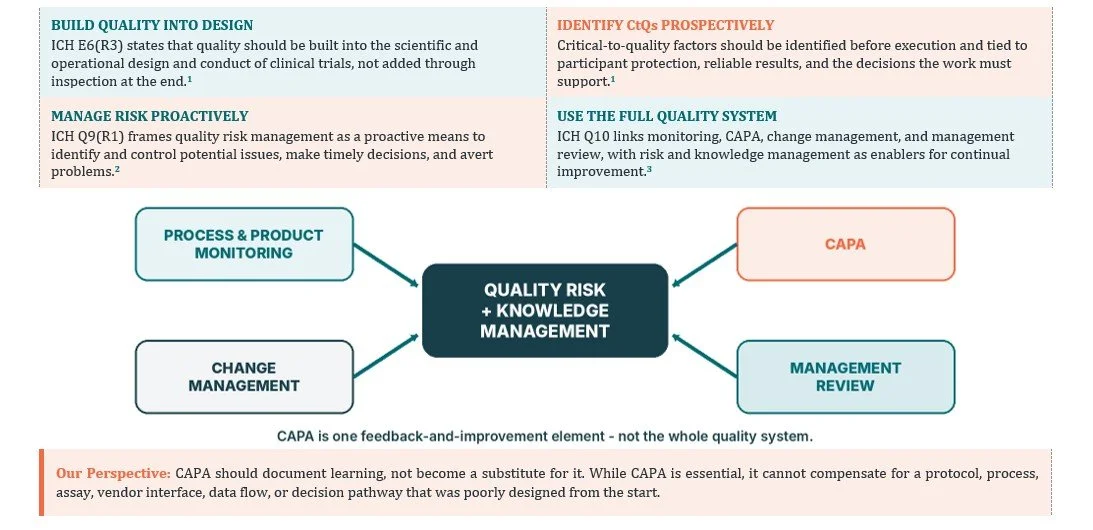
What Current Quality Guidance Points Toward
A Prevention-First Quality Operating Model
Move from event closure to prospective control, early warning, and demonstrated learning.

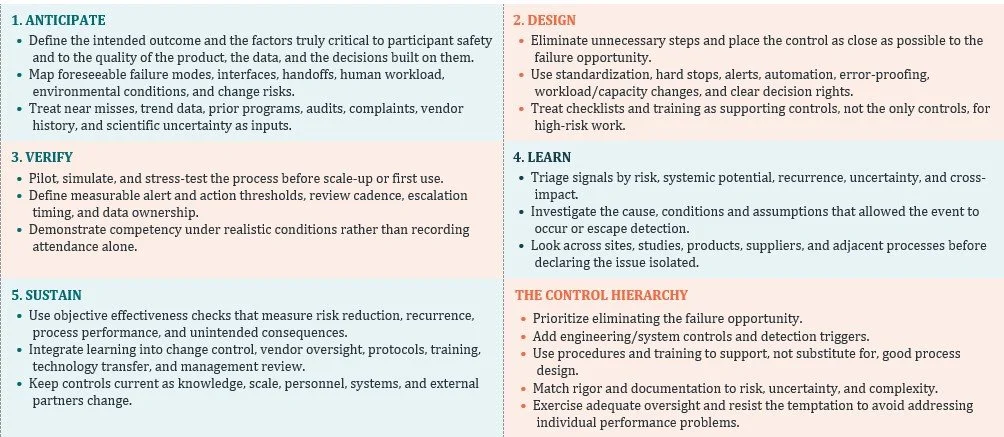
From Reactive CAPA Habit to a Prevention-First Quality System
The question isn't whether an organization has a CAPA process. Every mature quality system does. The real question is whether CAPA is driving organizational learning or simply documenting organizational memory. Prevention-first organizations use CAPA as one source of insight within a broader quality system designed to anticipate risk, strengthen processes, and continuously improve. The distinction is not procedural; it is strategic, cultural, and ultimately shaped by leadership. The comparison below illustrates the differences between these two approaches.
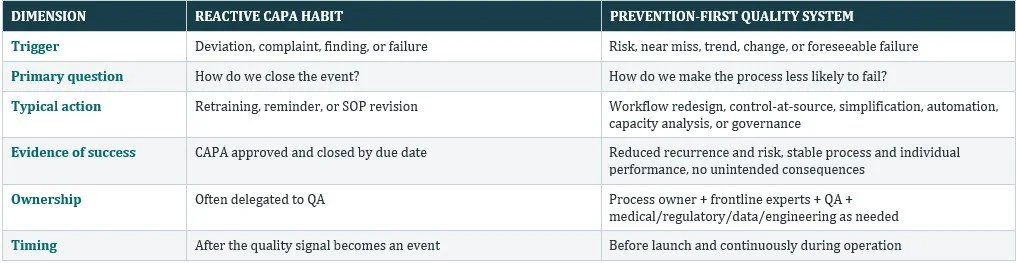
Bottom Line: Prevention starts before the deviation occurs. CAPA should convert what the organization learns into better process and product understanding, new or modified controls, verified improvement, and accountability.
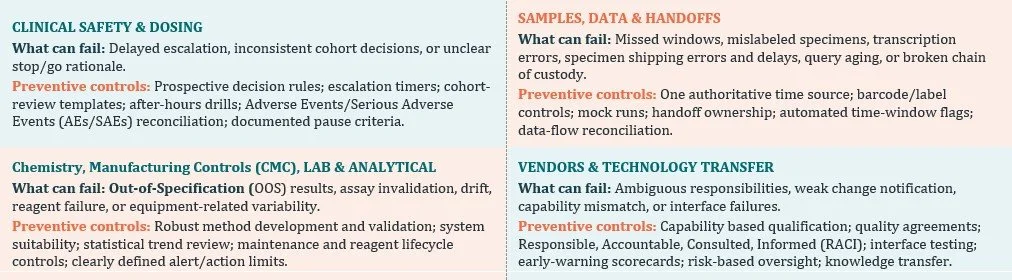
Where Prevention Creates the Most Value
Four High-Value Prevention Domains
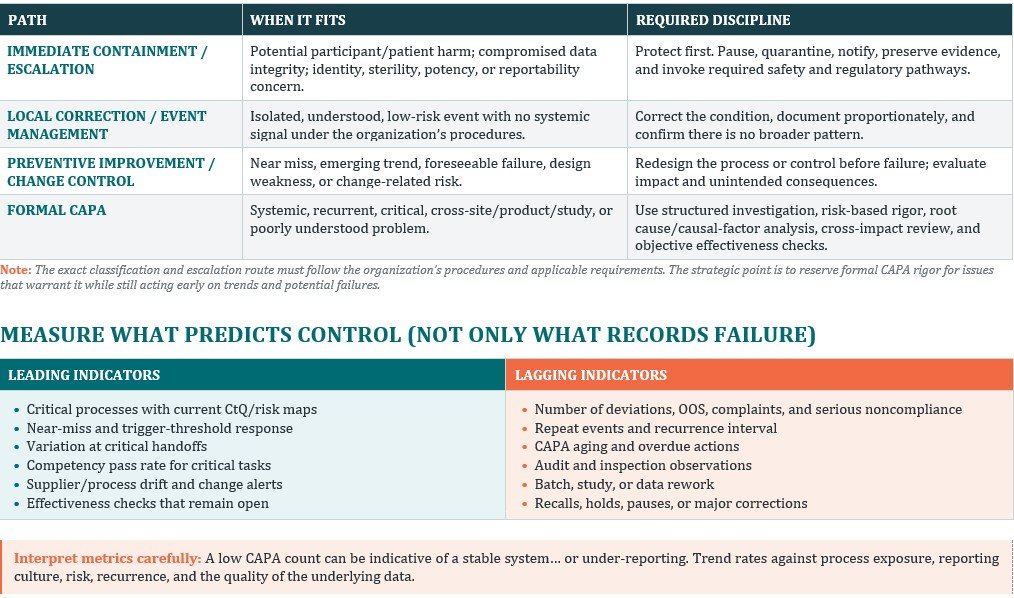
Not Every Problem Requires a CAPA
One hallmark of mature organizations is their ability to distinguish between events that require immediate action, issues that call for process improvement, and problems that demand formal investigation. A prevention-first quality system recognizes that not every event requires the same level of investigation or oversight. Applying the appropriate response - whether immediate containment, local correction, preventive improvement, or formal CAPA - helps organizations address risk efficiently while preserving the rigor of the CAPA process for issues that truly warrant it, thereby focusing resources where they create the greatest value.
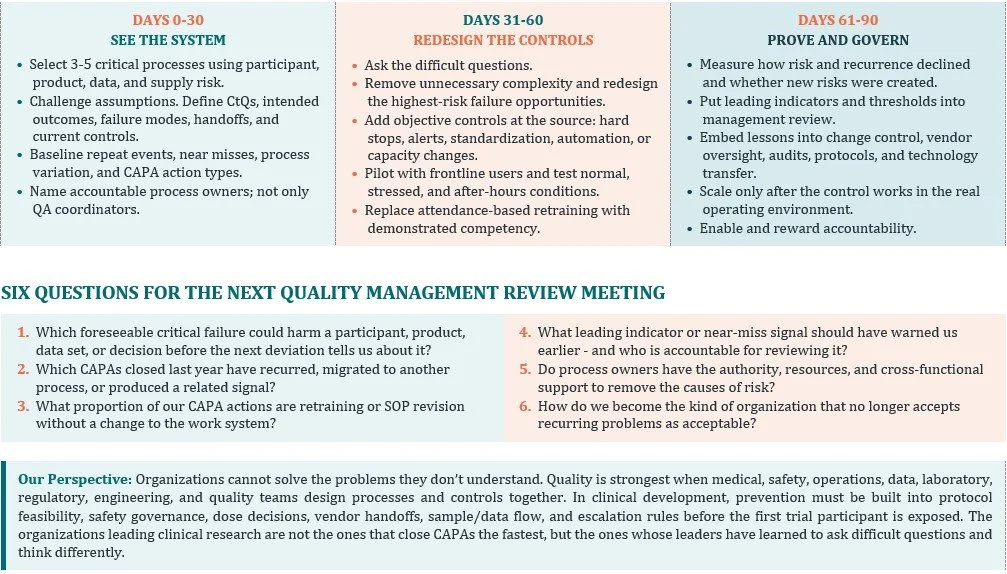
A 90-Day Plan to Break the CAPA Trap
Make prevention visible, owned, measurable, and part of normal operating governance.
MedSurgPI and Cedar and Stone Consulting can help: Quality-by-design reviews | clinical and safety risk mapping | independent readiness assessments and audits | CAPA/root-cause analysis strengthening | medical and regulatory governance